



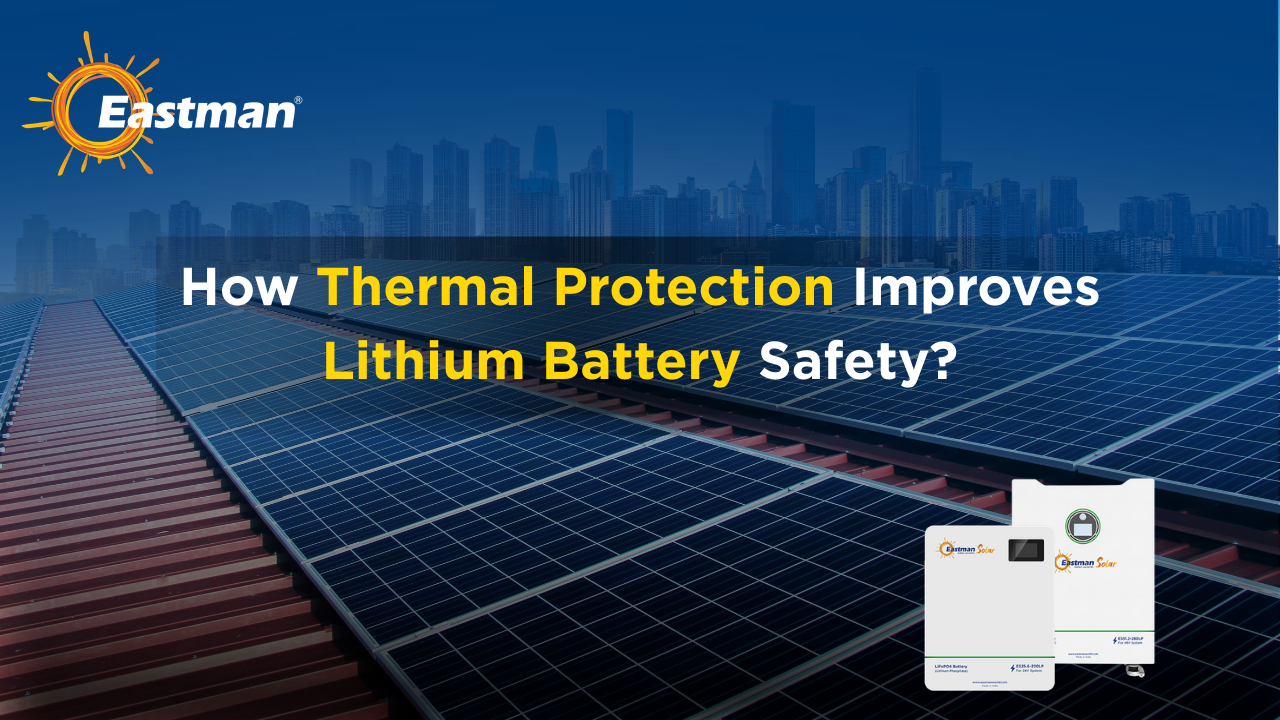
How Thermal Protection Improves Lithium Battery Safety
As solar energy adoption grows rapidly across India, energy storage systems are becoming an essential component of residential, commercial, and industrial solar installations. While lithium batteries offer high efficiency and long cycle life, safety remains a major concern for buyers.
For homeowners investing in rooftop solar and businesses installing hybrid systems, one critical question arises: How safe are lithium batteries under Indian temperature conditions?
The answer lies in one key feature: thermal protection in lithium battery systems.
Thermal protection is not just a technical feature; it is the foundation of modern lithium battery safety, especially in a country like India, where ambient temperatures frequently exceed 40–45°C.
Why is Lithium battery safety a major concern in India?
India’s operating environment presents several safety challenges:
High summer temperatures
Voltage fluctuations
Frequent power cuts
Continuous battery cycling
Indoor installations in compact spaces
Without proper lithium battery overheating protection, batteries can degrade faster and, in extreme cases, become unsafe.
This is why advanced battery thermal management systems are now a standard expectation in high-quality lithium batteries.
What is Thermal Protection in Lithium Battery Systems?
Thermal protection refers to the integrated mechanisms within a battery that:
Monitor temperature continuously
Prevent overheating
Regulate charging and discharging rates
Automatically disconnect the battery in unsafe conditions
Modern lithium batteries use a combination of:
Internal temperature sensors
Battery Management System (BMS)
Thermal cutoff protection
Heat-resistant cell chemistry
These features collectively enhance lithium battery temperature protection.
Understanding Thermal Runaway & Why Prevention Matters
One of the biggest safety risks in poorly designed lithium batteries is thermal runaway. Thermal runaway occurs when:
Battery temperature rises uncontrollably
Chemical reactions accelerate
Heat generation exceeds heat dissipation
In advanced systems, thermal runaway prevention is achieved through:
Stable LiFePO4 chemistry
Smart BMS control
Automatic shutdown mechanisms
Controlled charge and discharge limits
This is why LiFePO4 battery safety is considered superior to that of older lithium-ion chemistries.
Why is LiFePO4 chemistry safer for solar applications?
Among lithium battery types, LiFePO4 (Lithium Iron Phosphate) is widely recognized as one of the safest chemistries.
It offers:
Higher thermal stability
Lower risk of combustion
Stronger chemical bond structure
Better performance in high-temperature environments
For a solar lithium battery for homes in India, this stability becomes extremely important. In regions where summer temperatures reach 45°C, thermal resilience is not optional; it is essential.
Role of BMS in Thermal Protection
A high-quality Battery Management System (BMS) acts as the brain of the battery. It ensures:
Continuous temperature monitoring
Overcharge protection
Deep discharge prevention
Short-circuit protection
Automatic shutdown during abnormal heat conditions
The BMS intelligently controls charging and discharging currents to maintain safe operating temperatures.
Without a BMS-based battery thermal management system, even high-quality cells cannot guarantee long-term safety.
How Thermal Protection extends Lithium Battery Lifespan
Thermal protection not only improves safety but also enhances durability. Excess heat accelerates battery degradation. By controlling temperature, a battery can:
Maintain stable capacity
Reduce internal stress
Deliver consistent performance
Extend lithium battery cycle life
This is especially important for lithium batteries used in rooftop solar systems, where daily cycling generates continuous heat.
Why Thermal Protection is Critical for Hybrid Inverters & Battery Safety
In hybrid solar systems, batteries often:
Charge during the day
Discharge during peak evening hours
Operate under fluctuating grid conditions
This frequent cycling increases internal heating.
A properly designed hybrid inverter battery safety system ensures:
Safe performance during peak loads
Protection during voltage fluctuations
Automatic regulation under abnormal conditions
Thermal protection has become a non-negotiable requirement for hybrid installations.
High-temperature Lithium Battery performance in Indian Summers
Imagine a rooftop solar installation in Delhi, Jaipur, or Nagpur. Ambient temperature: 42–45°C, and the indoor battery room temperature may be even higher.
Without adequate lithium battery overheating protection:
Battery efficiency drops
Cycle life reduces
Safety risks increase
With advanced thermal protection:
Heat is continuously monitored and controlled
Charging slows during extreme heat
The system protects itself automatically
This makes choosing a safe lithium battery for solar systems critical for Indian users.
Safety Standards and Quality Expectations in India
Today’s informed buyers expect:
BIS-aligned products
International safety certifications
Integrated protection systems
Transparent performance ratings
When evaluating lithium battery safety standards in India, always check for:
Temperature operating range
Listed protection features
BMS specifications
Chemistry type (preferably LiFePO4)
Safety should never be compromised for price.
Why Thermal Protection is the future of Solar Energy storage in India
As India moves toward large-scale rooftop solar and hybrid installations, safety expectations will continue to rise. Consumers are now prioritizing:
Long lifespan
High cycle durability
Reliable thermal protection
Stable performance in high temperatures
Trusted brand support
In this evolving market, advanced thermal protection in lithium battery systems will define quality benchmarks.
Eastman Lithium batteries: Designed with advanced thermal protection
Eastman’s LiFePO4 lithium battery range integrates advanced safety features designed specifically for Indian operating conditions.
Eastman batteries incorporate:
Stable LiFePO4 chemistry
Intelligent Battery Management System (BMS)
Integrated thermal and electrical protections
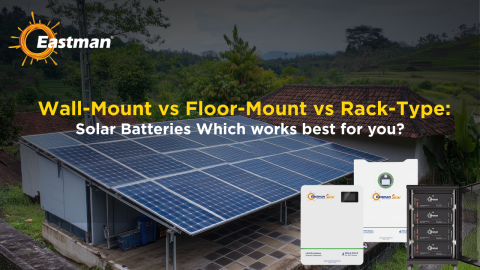
Rack, wall-mount, and floor-mount configurations
Design optimized for long-term solar energy storage
These systems are engineered to maintain high levels of lithium battery safety across varying climatic conditions.
Conclusion
For Indian homeowners and businesses investing in solar energy storage systems, safety must be the first consideration.
Thermal protection ensures:
Safe daily cycling
Protection against overheating
Longer battery lifespan
Reduced maintenance risks
Greater peace of mind
A well-designed battery thermal management system, combined with stable LiFePO4 chemistry and an intelligent BMS, significantly enhances overall lithium battery safety.
By integrating advanced protection mechanisms, Eastman continues to strengthen its commitment to safe, reliable, and future-ready solar energy storage solutions.
Contact Eastman Solar for more information.
Explore the Solar Lithium Batteries for more information.
Use your nearest Store Locator for convenience.
FAQ’s
Q1. Why is thermal protection important in India?
India experiences high temperatures, often above 40–45°C. Thermal protection helps lithium batteries operate safely and efficiently in these conditions.
Q2. Does thermal protection improve lithium battery lifespan?
Yes. By controlling heat and preventing overheating, thermal protection reduces internal stress and extends battery cycle life.
Q3. Is LiFePO4 safer than regular lithium-ion batteries?
Yes. LiFePO4 batteries offer higher thermal stability and lower risk of overheating, making them safer for solar energy storage systems.
Q4. How does a Battery Management System (BMS) enhance safety?
A BMS monitors temperature, voltage, and current, and automatically disconnects the battery if unsafe conditions are detected.
Q5. Are lithium batteries safe for rooftop solar systems?
Yes. When equipped with proper thermal protection and BMS, lithium batteries are safe and reliable for rooftop solar applications.
Q6. Do Eastman lithium batteries include thermal protection?
Yes. Eastman LiFePO4 lithium batteries are designed with integrated BMS, and advanced protection features for safe performance in Indian conditions.
 78728 78728