



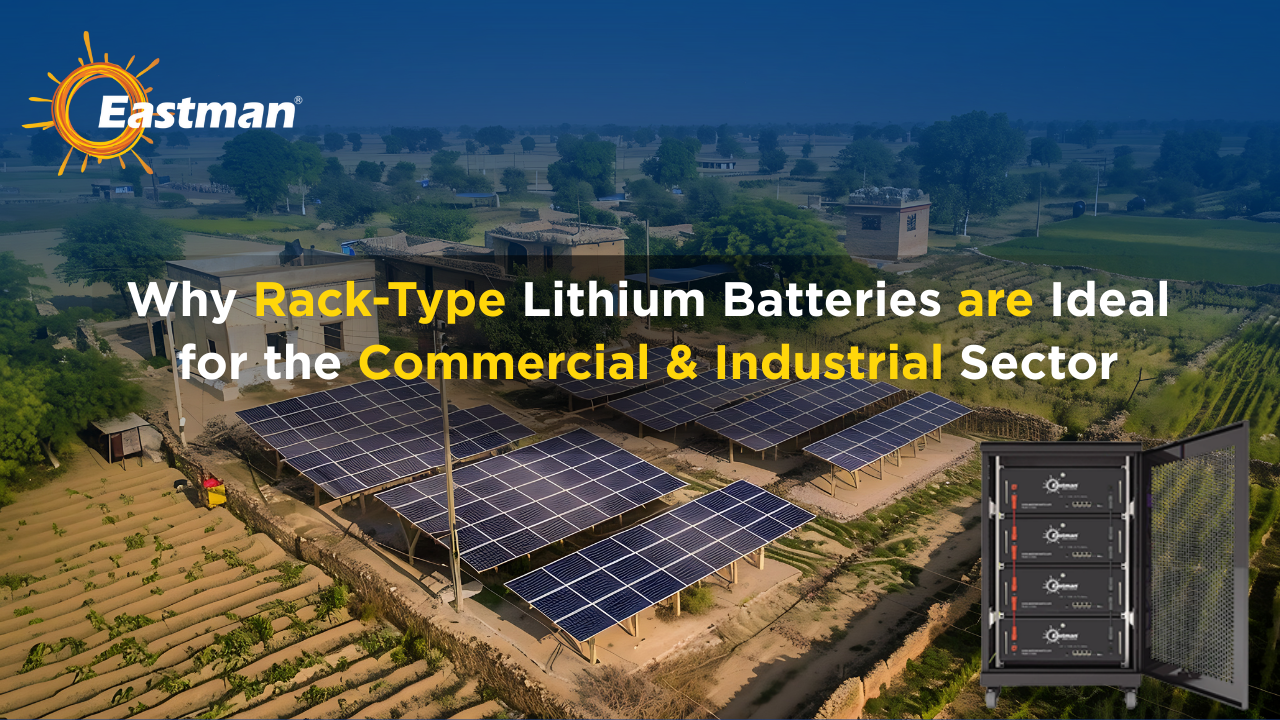
Why Rack-type Lithium Batteries are Ideal for Commercial & Industrial Sector
Transforming Power Storage with Efficiency, Scalability, and Reliability. As global energy demands surge, commercial and industrial enterprises are shifting toward smarter, cleaner, and more resilient power strategies. Solar energy, once limited to rooftop installations, has now evolved into a full spectrum of renewable configurations, especially when paired with advanced energy storage solutions.
At the forefront of this evolution are rack-type lithium batteries, engineered to deliver high capacity, superior performance, and scalable energy storage specifically tailored for the rigorous needs of commercial and industrial operations.
In this comprehensive guide, we’ll explore why rack-type lithium batteries are the ideal choice for the C&I sector, how they outperform traditional alternatives, real-world benefits, and what makes solutions from trusted energy brands like Eastman stand out in the marketplace.
What is Rack-Type Lithium batteries?
Rack-type lithium batteries are modular battery systems designed to be mounted in racks, much like servers in a data center, and are optimized for high capacity, scalability, and professional energy infrastructure applications.
Unlike compact home batteries or irregular battery stacks, rack-type systems are built for:
Professional installation
Large-scale energy storage
High-duty cycling
Smart energy management interfaces
Easy modular expansion
They are typically used in:
Commercial buildings
Manufacturing plants
Retail complexes
Data centers
Hospitals
Warehouses
Microgrids
The C&I segment: Need for better storage
Commercial and industrial facilities typically operate on complex, high-load electrical systems that demand reliability, efficiency, and long-term cost optimization. These facilities often face:
Rising peak electricity charges
Unpredictable grid reliability
Increased focus on sustainability goals
Larger energy demands than residential systems
Greater sensitivity to downtime
Traditional power sources, including diesel generators or grid dependence, no longer meet the performance, cost, or environmental criteria of modern enterprises.
This has driven widespread adoption of solar PV systems and, critically, energy storage. By integrating energy storage with solar generation, facilities can store excess energy, cut costs, and improve power resilience.
Among storage options, rack-type lithium batteries are increasingly preferred for commercial and industrial applications, and for very good reasons.
Advantages of Rack-Type batteries for C&I
Let’s dive into the major advantages that make rack-type lithium batteries the go-to storage solution for businesses.
1. Scalability for Growing Energy Demands
Commercial and industrial sites require flexibility; they may expand operations, add new loads, or boost energy usage over time.
Rack-type lithium batteries are inherently modular:
Add racks to increase capacity
Match power output with demand
Support phased expansions
This scalability helps businesses invest incrementally rather than committing to a huge upfront system.
2. High Energy Density & Compact Footprint
Unlike traditional lead-acid or bulky storage systems, lithium technology offers:
Higher energy per unit volume
Smaller physical footprint
Easier installation in electrical rooms
This is critical in facilities where space is premium and every square foot counts.
3. Longer Lifespan and Lower Total Cost of Ownership
Rack-type lithium batteries typically provide:
5,000+ cycles
Minimal capacity degradation
Higher usable energy per cycle
Compared to lead-acid or other older chemistries, lithium systems last longer and require fewer replacements, translating to lower lifecycle costs.
4. Superior Charge/Discharge Performance
Commercial operations need batteries that can:
Discharge large loads quickly
Recharge rapidly when excess solar energy is available
Respond instantly to power demands or grid outages
Lithium batteries excel in rapid charge/discharge behaviors, ideal for systems connected to solar arrays, grid support mechanisms, and peak-shaving strategies.
5. Efficient Round-Trip Energy Performance
Round-trip efficiency refers to how much stored energy is actually usable after losses. High efficiency means more of what you generate, and store gets used.
Rack-type lithium batteries deliver 90% or higher round-trip efficiency, significantly outperforming most traditional storage options.
6. Advanced Battery Management Systems (BMS)
Modern rack-type lithium battery systems include sophisticated BMS features that:
Balance cell performance
Monitor temperatures
Prevent overcharge/discharge
Extend battery life
Provide real-time diagnostics
These systems empower facility managers with insights and control, crucial for large operations.
7. Enhanced Safety Features
Safety is paramount in commercial installations. Rack-type lithium systems come with multiple built-in protections:
Thermal management
Short-circuit protection
Overcharge cutoff
Fire-resistant construction
These features reduce risk and improve reliability in demanding operational environments.
Practical use cases: Transforming C&I Operations
To better understand the impact of rack-type lithium batteries, let’s examine how they’re being used in real commercial and industrial applications.
1. Peak Load Shaving and Demand Charge Reduction
Electricity costs for businesses often include demand charges and fees based on peak usage periods.
By storing energy during low-cost periods (like midday solar production) and using it during peak demand, rack-type lithium systems help businesses effectively reduce demand charges and lower operational costs.
2. Solar + Storage Integration
Many commercial facilities are now adopting solar + battery hybrid systems to maximize renewable usage.
Benefits include:
Storing excess solar energy
Reducing grid dependency
Lowering utility bills
Enabling time-of-use optimization
Rack-type lithium batteries make these systems efficient, reliable, and future-ready.
3. Critical Power Backup Solutions
Hospitals, data centers, and manufacturing lines cannot tolerate power interruptions.
Rack-type lithium batteries provide:
Seamless backup during outages
Instant response and high-power capacity
Clean and reliable power for critical loads
This ensures business continuity and operational safety.
4. Microgrid & Off-Grid Commercial Systems
In remote locations or campuses that operate partially off-grid, rack-type lithium storage supports efficient microgrid operation by balancing loads and providing autonomy when needed.
5. Industrial Automation & High-Demand Loads
Manufacturing facilities with automation systems, robotics, and large motors require storage systems that can handle:
High instantaneous power
Frequent cycling
Consistent performance
Rack-type lithium batteries deliver the reliability needed for these high-duty environments.
Rack-Type Lithium batteries vs Lead-acid batteries
Feature | Rack-Type Lithium | Lead-Acid |
Energy Density | High | Medium |
Cycle Life | 4000+ | 300-2000 |
Efficiency | 90%+ | 60–80% |
Space Requirement | Compact | Bulky |
Maintenance | Low | High |
Cost Over Lifecycle | Lower | Higher |
Scalability | Excellent | Limited |
As the table shows, rack-type lithium batteries combine performance, scalability, and cost-effectiveness in a way few other technologies can match, especially for commercial scale.
Choosing the right Rack-Type lithium battery
When evaluating systems, keep these key factors in mind:
1. Capacity & Power Rating: Match your facility’s peak and continuous power needs to the battery system’s specifications.
2. Modular Scalability: Choose a system that allows future expansion as energy demands grow.
3. Compatibility with Solar & Inverters: Ensure seamless integration for hybrid systems, peak shaving, or grid services.
4. Warranty and Support: Select products backed by strong warranties and reliable support, a hallmark of quality brands like Eastman.
Installation, Maintenance & Safety considerations
A reliable system also depends on proper installation and maintenance.
Installation Best Practices
Designed by certified professionals
Adequate ventilation and cooling
Correct electrical configurations
Safe grounding and protection
Maintenance Tips
Monitor battery health regularly
Keep racks clean and free of dust
Use smart BMS dashboards for alerts
Schedule preventative checks
Safety Enhancements
Fire-resistant enclosures
Emergency shutdown systems
Temperature sensors
Remote monitoring alerts
A properly installed rack-type lithium system delivers not just performance but peace of mind.
Why Eastman is a trusted choice
When selecting an energy storage solution, brand reputation matters. Eastman offers:
Made in India
We have own manufacturing facility
Configuration 20 kWh and above
These qualities have helped Eastman products emerge among the top solar and battery brands globally, known for performance, durability, and real-world impact.
Conclusion
In an era where energy efficiency, reliability, and sustainability are strategic business priorities, rack-type lithium batteries are redefining what’s possible for commercial and industrial power systems.
From peak shaving and grid support to solar integration, backup reliability, and microgrid autonomy, these systems deliver flexibility, scalability, and performance that traditional batteries simply cannot match.
And when backed by trusted, globally recognized brands like Eastman, enterprises can deploy cutting-edge energy storage with confidence, ensuring operational continuity, cost savings, and a greener future.
Ready to transform your commercial or industrial energy systems?
Power your business with next-generation rack-type lithium batteries from Eastman.
Contact Eastman for more information.
Explore Eastman Solar battery Solutions.
Get to know your nearest Store Locator for convenience.
FAQ’s
Q. What is a rack-type lithium battery?
A. It’s a modular lithium battery system designed for mounting in racks, ideal for high-capacity commercial and industrial energy storage.
Q. Are these batteries suitable for solar + storage systems?
A. Yes, they are especially effective when paired with solar arrays for hybrid systems.
Q. How long do rack-type lithium batteries last?
A. Modern lithium systems provide 2,000+ cycles, often outlasting alternative technologies and delivering longer service life.
Q. Do rack-type lithium batteries require maintenance?
A. No significant routine maintenance is needed beyond periodic inspections and monitoring.
Q. Can these batteries support critical loads?
A. Absolutely, they’re engineered to deliver consistent power for sensitive, high-demand applications.
Q. Are these systems scalable?
A. Yes, modular design allows capacity expansion as energy needs grow.
Keywords: Rack-type lithium batteries, commercial energy storage solutions, industrial solar battery systems, lithium battery for commercial use, Eastman lithium batteries, top solar and battery brands, solar + storage integration, hybrid energy systems, scalable battery storage, high-capacity lithium storage.




 78728 78728